. . . . . . . . . . . . . . . . . . . .
On Today’s Menu:
. . . . . . . . . . . . . . . . . . . .
** Share some walnut apricot bread for the birthday of a pioneer botanist.
** Linger to mull over science education in the 1880s vs the 1970s!
** Savor a last ½ cup musing over family stories of meeting the local VIP.
. . . . . . . . . . . . . . . . . . . . . . . . . . . . . . . . . . . . . . . . . . . . . . . . . . . . . . . . . . . . . . . . . . . . . . . . . . . . . . . . . . . . . . . . . . . . . . . . . . . . . . . . . . . .
STT-80
First Sip:
You must still go afoot if a real botanist.
No field botanist should become soft
and travel only in an auto.
– Willis Jepson1
circa 1920
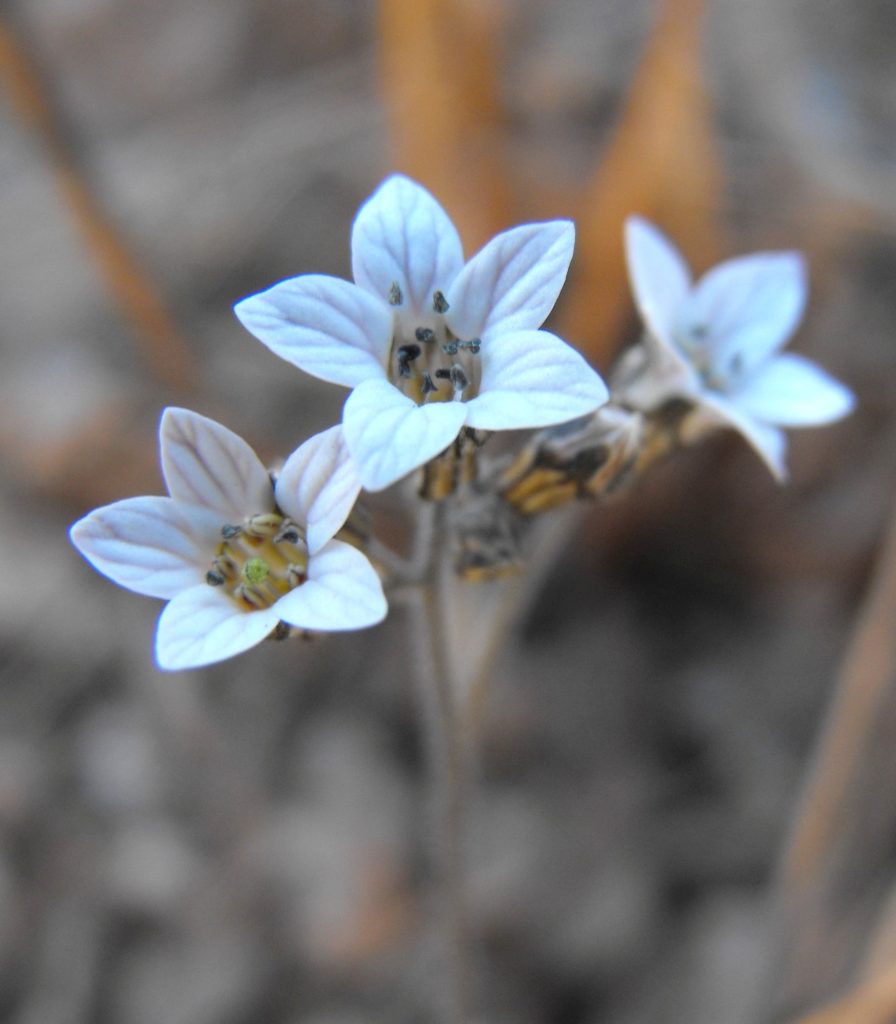
Jepsonia flower
Blue Sky Ecological Reserve, California
(photo by Stickpen)
.
Slice of Cake:
We had things.
We had horses and cows and chickens.
And flour from our wheat, and fruits from the orchard—
But we never had any money.
– Willis Jepson1
A young couple named Martha Ann and William Jepson left Missouri,
riding a cattle-drawn covered wagon, heading west. This was 1857.
They settled near Alamo Creek in a 6-year-old township
called Vacaville, California.1,11
Over the years the Jepsons farmed their Vacaville homestead—
and started a family: They had three daughters and a son named Willis.
(Their fifth child, another little boy, was killed in horse riding accident.)1
William Jepson taught his children to work hard, and to help around the farm.
He believed reading and books were a waste of time.
His son Willis, on the other hand, loved books.
With the little money he had, he bought a second-hand set of novels
by Charles Dickens—a set he kept all his life.
Martha Ann Jepson, alternatively, taught the children a love for nature.
[My mother had] an almost
inordinate love of…the songs of birds, of the
sound of running water, of the flowing wind waves
rippling the field of summer wheat—and all
manner of joyous and pagan things.
– Willis Jepson1
After graduating high school,
Willis Jepson traveled by train to Berkeley to take the college entrance exams there.
He was the first person from Vacaville ever to apply to the University of California.1
(Nowadays, the University of California system has ten campuses around the state.
But back in 1885 when Jepson was applying, there was only one University of California: Berkeley.)
Jepson’s application was accepted.
Four years later, he was one of 35 men and 7 women graduating with a bachelor’s degree
in the University of California’s Class of 1889.1
Willis Jepson was then hired to teach at Berkeley. Along with teaching, he began
his own research—which included many plant-collecting trips around California.
The joy of science is in
never-ending exploration and discovery.
– Willis Jepson1
March 20, 1934
In 1899, Jepson received the first PhD in Botany
that the University of California had ever awarded.1
Dr. Willis Jepson went on to teach botany at Berkeley for almost 40 years.
His field work covered most of the state…
He was particularly fond of the
lesser-known deserts, mountains, and valleys.
– Alva R. Davis, et al 2
He would sleep under the stars…
cook his meals over a fire, trespass and collect
where he wished—even in National Parks…
– Richard G. Beidleman1
And speaking of national parks,
Willis Jepson visited Yosemite for the first time in 1890—the year it became a national park.
Two years later, in 1892, Jepson collaborated with John Muir and
Warren Olney, Sr. (the future Oakland mayor) and others to form the Sierra Club.1,13
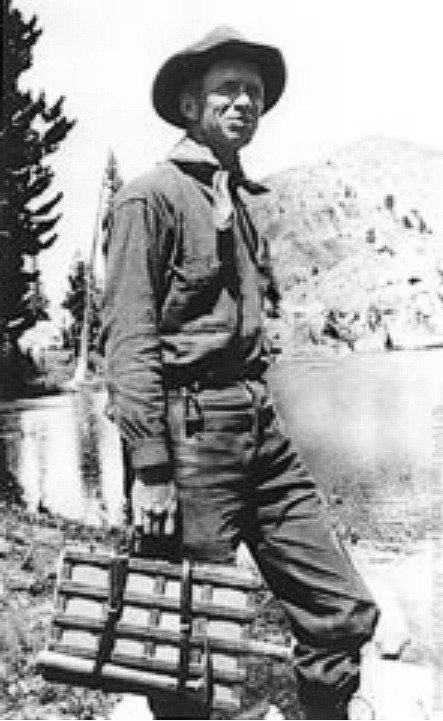
Willis Linn Jepson with his plant press
in the Sierra Nevada in 1911
There’s no controversy about Jepson’s standing as scientist.
He’s well known for his accurate descriptions and
careful classifications of plants. And he described a lot of plants!
Willis Jepson himself named over 150 of California’s plant species.12
His success was, in part, simply timing.
David D. Keck notes that Jepson’s plant collecting trips
took place “when new species were yet to be found on almost every
mountain range and valley floor.”12
He looked…with the discriminating eye of the
master systematist, but also with the enthusiasm and
reverence of the naturalist and woodsman.
– David D. Keck12
Accounts vary as to what Dr. Jepson was like as a teacher, and as a man.
In person, he was by turns gregarious and defensive.
He seemed to have been both a solitary wanderer, yet loyal to at least one friend.
Willis Jepson suffered from occasional mental breakdowns and he found that
the St Helena Sanitarium in Napa County was a tranquil retreat for him.
He wrote: “One finds there an atmosphere of peace, quiet, good cheer and hopefulness.”1
As a teacher, Jepson appeared to expect a lot of independent learning by his pupils.
Jepson was genial and friendly with his students,
but very formal and kept them at a distance…
He frankly discouraged students who were not able to
pursue and solve their own problems by themselves…
He almost never took a student into the field with him.
– Herbert L Mason3
I read a very thorough, warm, and laudatory tribute article written
by Richard Beidleman soon after Willis Jepson’s death in 1946.
Among Beidleman’s praises and lists of Jepson’s accomplishments,
there was mention of a rivalry with a man named Herbert Mason.
Mason was a graduate student of Jepson’s who became a colleague, and
then later a replacement for Jepson—in both teaching and administration duties.
Jepson seems to have felt a deep and bitter rivalry with him.
In Jepson’s view,
this up-and-coming young botanist was beginning
to lure away Jepson’s graduate students…
Until at long last Jepson swore that he never even wanted to
hear the name ‘Mason’ mentioned in his presence.
– Richard G. Beidleman1
Herbert Mason wrote his own article about Jepson in 1947;
where, among other things, he calls him “one of the most colorful,
dramatic, and stormy figures in the history of California botany.”3
Mason describes Jepson as an excellent scientist—
someone who could be warm and friendly in person;
he loved to quote poetry, for example, especially Rudyard Kipling.
And Jepson certainly was a vivid storyteller recounting his
many adventures out in the field.
On occasion he was the most genial and gracious host,
a witty and charming companion.
– Herbert L Mason3
However, Mason also makes a point to say that Jepson had a side to him
which was solitary, paranoid and suspicious.
Jepson never married…
He lived a singularly lonely life.
…
There were few, if any, of his fellow men whom he trusted.
…His chief obsession was a fear that he would be
robbed of a rightful place in posterity.
…
The significant storms of his life were wholly within himself…
a one-sided struggle between uncontrolled suspicions
and the charming, friendly Jepson.
– Herbert L Mason3
Sadly, it seems that Willis Jepson wasted energy worrying
about being wronged or forgotten; and therefore left his
most important and comprehensive book to be finished by others after his death.
The countless hours spent in brooding over
fancied wrongs cost him dearly in time and in energy and
robbed him of the vitality that he needed
to complete his life work.
– Herbert L Mason3
But Jepson did have at least one good friend.
He met Abby Waterman when she was a student at Berkeley,
around the time Jepson received his own doctorate degree.1
After she graduated from Berkeley in 1904,
Abby’s career as a botanist was cut short by her ill health, and she
returned to her family’s ranch near Barstow, California.1
Jepson first visited Abby at the Waterman Ranch in the spring of 1912.
He would return there regularly for the rest of his life:
both to relax, and to explore and collect plant specimens—often with Abby—
in the surrounding Mojave Desert, a landscape that fascinated him.
He once wrote that the open desert “caused my spirits to rise,
and at once I felt better in body as well as cheered and sustained in mind.”1
Sitting here on the ground
studying flower parts under the lens is a pleasant occupation.
When one’s eyes tire, there are the desert ranges
stretching one beyond another
and a soft breeze blowing from the west.
– Willis Jepson1
Willis Jepson dedicated the second volume
of A Flora of California to Abby.
Abby Louise Waterman, daughter of the desert, and
of a race of sages; penetrating observer of the
arid wastes of mesa and playa…
To her is inscribed this dedication page,
…by the botanical traveler, who, driven from
pitiless ranges and stone-dry hidden valleys…
found elemental shelter at Waterman Ranch
in the heart of the Mohave.
– Willis Jepson1
1936
So, as a teacher and colleague, the reviews seem a bit mixed…
But what is clear is that Jepson’s main focus was never about teaching.
Mostly he concentrated on collecting plants for his herbarium…
And on writing books!
Jepson published at least 11 books on California plants—
including two volumes of his ambitious A Flora of California.
Starting as early as 1894, Jepson meant A Flora of California to be
a comprehensive cataloging of all the native plants of California.
Richard Beidleman called it Jepson’s “perpetual goal” and his “magnum opus.”1
Jepson himself called it “a symbol of my life.”
It remained unfinished when he died in 1946.
To this day,
the University of California is still working to complete and update A Flora of California.
The university website describes it as a “botanical masterpiece” and a resource
that is “still much in demand by scholars.”4
Jepson’s ‘A Flora of California’ is…a cornucopia of
information—gathered over Jepson’s lifetime—on the
plants of California in the early 20th century.
– from the book room at UC Berkeley4
A Flora of California…is perhaps
the outstanding work on regional flora thus far
produced in this country… [It’s a] wealth of
field observation, ecological and geographical data,
profuse illustration, and…eminently sane taxonomic judgment.
– Alva R. Davis2
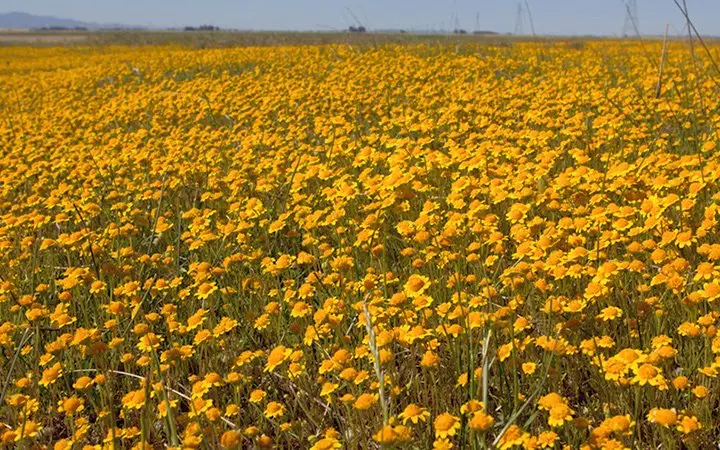
Jepson Prairie Reserve
(photo by Lobsang Wangdu)
Willis Jepson’s philosophy was to encourage everyone to take a slow,
careful look at our local trees and plants; and then add at least a little
knowledge through study—that we can add immeasurably to our lives
by gaining a better understanding of the living world around us.
Willis Jepson’s work lives on in collections at the university at Berkeley.
And his name lives on embedded in the geography and flora of his home state.
In California,
there is a mountain named after Willis Jepson;5
And a prairie meadow named after him;6
And a middle school;7 (more on that below)
And even a 600-year-old laurel tree.8
Happy 158th Birthday
** Willis Linn Jepson **
– born August 19, 1867
in Vacaville, California
.
Linger Awhile:
Every educated person
should know, at least broadly, the native forests,
shrubs, and flowering plants in his own state—
so that elsewhere he may be an intelligent traveler.
– Willis Jepson1
I was thinking this week about growing up in Vacaville,
and how, at my high school, there was one class that I
absolutely loved: Botany.
Although both Willis Jepson and I attended pretty much
the only high school Vacaville had….
We went to school in different centuries!
Same town + different times = different schools.
[At the] newly-established
Normal and Scientific School in Vacaville…
young Jepson encountered chemistry, geology, zoology…
And then there was botany—
which included field trips and collecting.
– Richard G. Beidleman1
I graduated in 1979 from Vacaville High School—
a school that didn’t exist until 1898.
Jepson graduated in 1885 from California Normal and Scientific School—
A school that was torn down in 1890.9
(Too bad, though! Sounds kind of cool.)
Side note:
“Normal schools” is an old name for teacher training colleges,
where you learned the ‘norms’ of the teaching profession.
Like Willis Jepson’s high school botany class,
my class gathered and identified native plants—
and then dried and glued into an herbarium.
One of his first preserved plant specimens was
a Lepidium nitidum (Common Peppergrass)
collected on March 6, 1884, probably around Vacaville.
– Richard G. Beidleman1
That Herbarium of California Wildflowers that I
made in my high school botany class? I still got it…


Wild Radish
(Raphanus raphanistrum)
collected: Cantalow Rd, Vacaville
on April 10, 1978
Quaking Grass
(Briza minor)
collected: Cantalow Rd, Vacaville
on April 10, 1978
California poppy
(Escholtzia californica)
collected: Gualala, CA
on April 15, 1978
While we were working on our own herbariums, my botany class
went on a field trip to Berkeley—to see the Jepson Herbarium for ourselves.
Just one problem:
When we arrived at the university, we were told, “No. Sorry.
That collection is not open to the public.”
Luckily, my botany teacher was having none of it.
“Not only,” she stated, firmly,
“Did we just travel an hour on a bus to get here—but we’re from Vacaville!
Most of these kids went to Willis Jepson Junior High School!
You can’t now keep them out of the Willis Jepson Herbarium.”
We got in.
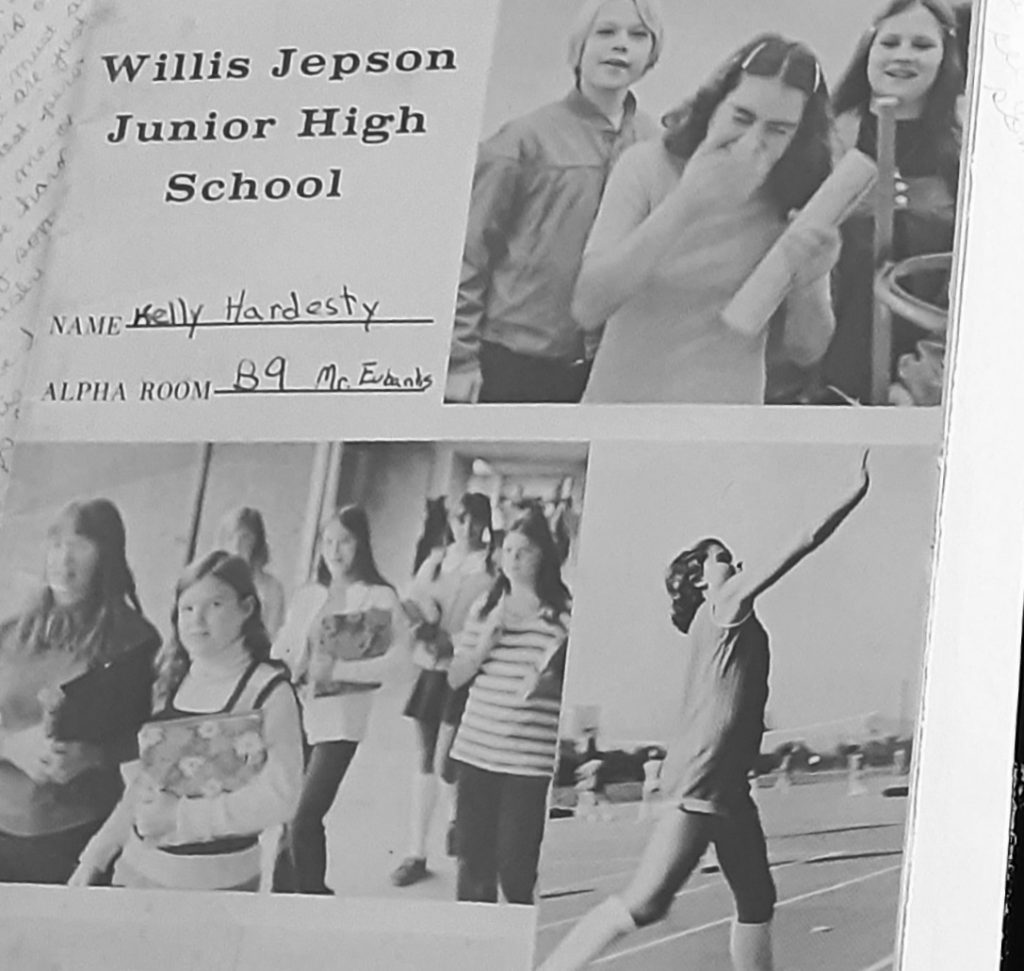
That teacher wasn’t lying.
Most of us had attended Jepson Jr High.
Including me. For grades 7, 8, and 9.
.
“Half Cup More”
Growing up in Vacaville, I knew a few people whose grandparents
had met Willis Jepson, in one way or another. Here are two of those stories…
The first is when Willis Jepson (who never gave much thought to private property lines)
was out on one of his plant-collecting trips, and was tramping through a Vacaville ranch.
According to my nephew’s grandfather—who owned the ranch—
Jepson saw a tree on their property and called it: “the largest live oak he’d ever seen.”
Long after Jepson’s death, the University of California continued to monitor that tree.10
The second is my friend’s grandfather knew Willis Jepson—though she’s not sure how…
Her grandmother went to Berkeley, but much later and didn’t study botany.
Her grandfather grew up in Vacaville, but was more than 10 years younger than Jepson.
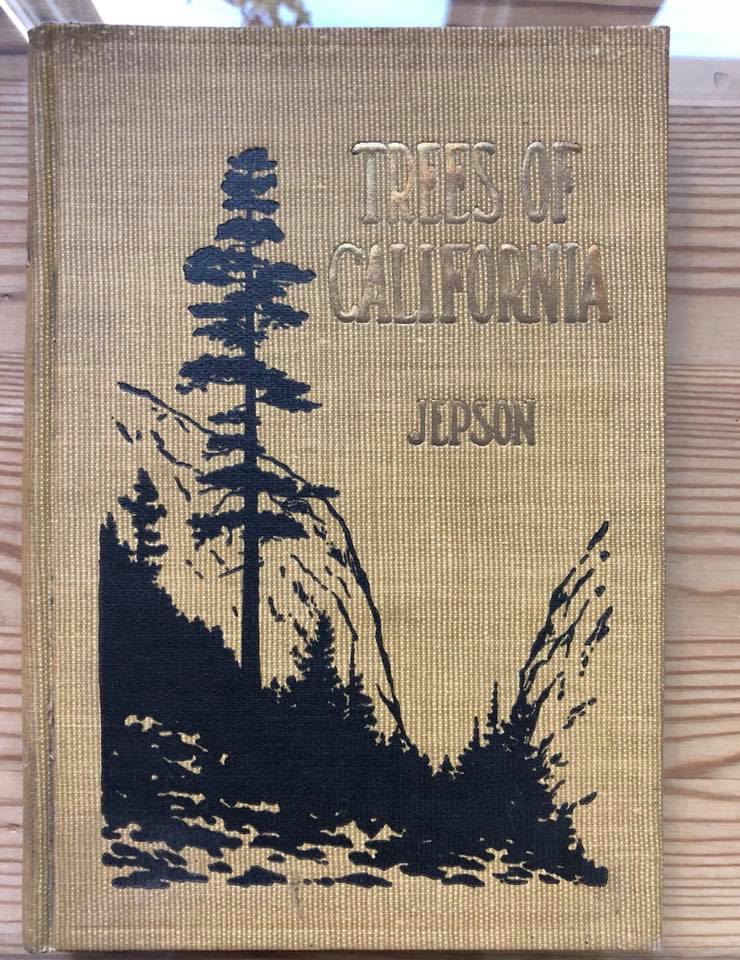
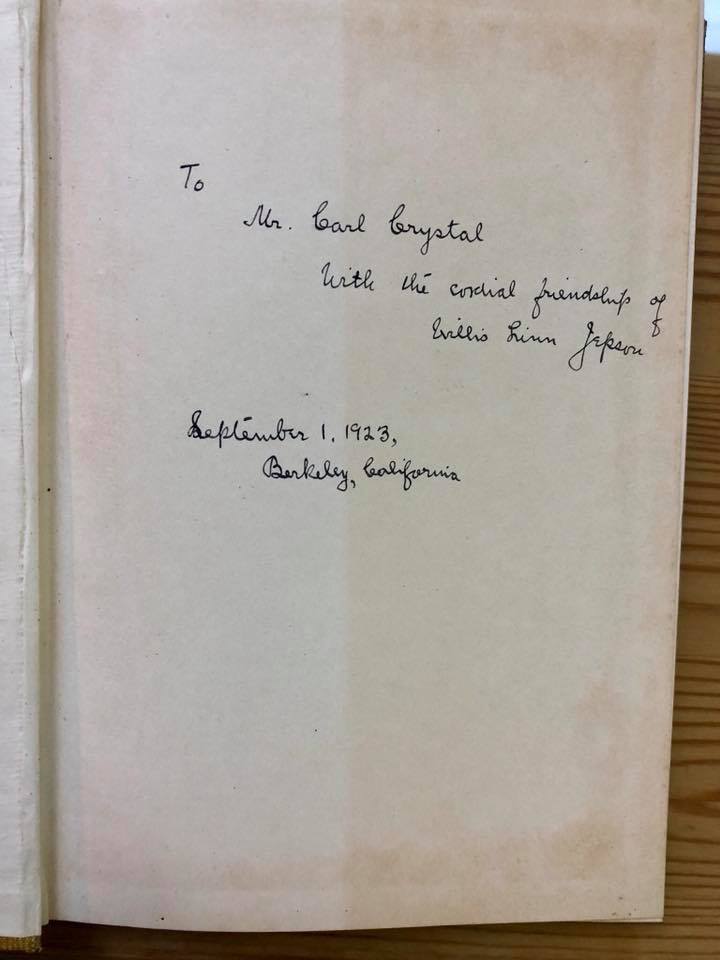
But their family still has a signed copy of a book Jepson gave them in 1923.
Jepson inscribed a copy of The Trees of California to her grandfather: ‘with cordial friendship.’ 10
Willis Jepson is buried in the Pioneers Section of the old graveyard in Vacaville.
(I think his is the prettiest gravestone.)
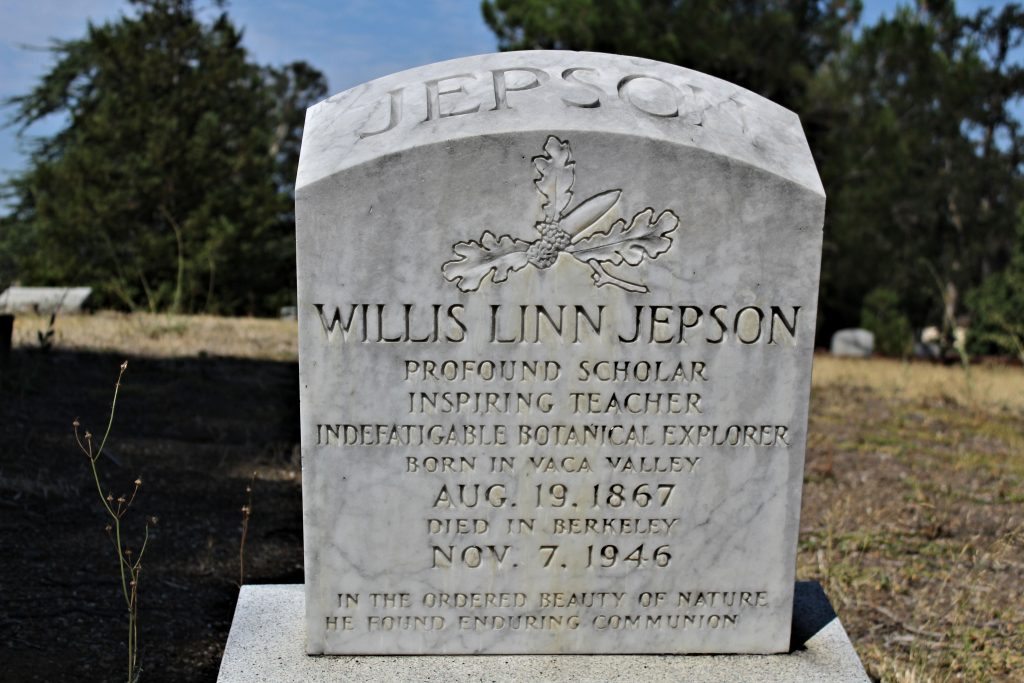
“In the ordered beauty of nature he found
enduring communion”
(photo by me)
.
Take-Away Box
The native trees of California,
their habits, places of growth, times of seeding:
…These things do not form a very ‘practical’ study to be sure,
but they are the basis of…a means of mental enjoyment—
which is cultivation in the best sense.
…
A scientific interest in…our natural environment
…directs one to useful and agreeable intellectual activity.
…
The author, therefore, cherishes the hope that these pages
may be an inspiration to…take up special studies of our trees
for the sake of intellectual pleasure.
– from the introduction to The Trees of California
by Willis Linn Jepson, PhD.
University of California, Berkeley.
March 1909
.
Thank you for reading!
— Kelly J Hardesty
Thoughts? Questions?
I would love to hear what you’re thinking!
Go ahead & scroll down to the end—where you can
leave me note in the comments box.
notes & footnotes
————————-
1.
Willis Linn Jepson: The Botany Man
by Richard G. Beidleman (2000)
https://ucjeps.berkeley.edu/history/biog/jepson/jepson_the_botany_man.html
2.
Obituary of Willis Linn Jepson
by Alva R. Davis, Lincoln Constance, and George D. Lauderback
https://ucjeps.berkeley.edu/history/biog/jepson/jepson_obit.html
Regents of the University of California
1946
3.
Willis Linn Jepson
by Herbert L Mason
Botany professor, University of California
written for the California Botanical Society in
Madroño: a Western American Journal of Botany
Vol 9: 1947
https://www.jstor.org/stable/41422591
4.
The University of California, Berkeley has two resources for Jepson’s work:
the Rare Book Room and the Jepson Herbarium.
The university’s Rare Book Room has
information about Jepson’s Flora of California
https://ucjeps.berkeley.edu/db/flora/rarebook.html
The Jepson Herbarium
https://ucjeps.berkeley.edu/jeps/
..
..
..
..
..
..
Willis Linn Jepson in the Herbarium
University of California, Berkeley
5.
Jepson Peak also known as Mt Jepson
is in San Bernardino County, California—
about 80 miles south of Yosemite National Park
Name first appears on USFS San Bernardino National Forest map in 1965.
Summit Signature: 24G
(Called “Mount Jepson” on original HPS 1946 Peak List)
https://hundredpeaks.org/signatures/24g.htm
Named by USFS surveyor Don McLain
for Willis Linn Jepson…who made a study of plant life
in the San Bernardino Mountains in 1914.
6.
Jepson Prairie Reserve
https://ucnrs.org/reserves/jepson-prairie-reserve/
info from their webpage:
Located in the southern Sacramento Valley, Jepson Prairie Reserve is
an island of remnant natural prairie in a wide alluvial floodplain
otherwise used primarily for agriculture.
Reserve lands are owned by the Solano Land Trust (SLT)
and protected by the trust and The Nature Conservancy (TNC).
The University of California assists in the management of this site.
The reserve protects one of the best few remaining vernal-pool habitats,
which are found only in the western United States and few other places in the world,
as well as precious remnants of native bunchgrass prairie
that once covered one-fourth of California.
Altogether, over 400 species and 64 families of plants, including 15 rare and endangered plants,
such as dwarf downingia, Colusa grass, and delta tule pea and fragrant fritillary.
It’s also the only known home for the federally-threatened
delta green ground beetle and federally- and state-endangered Solano grass.
Two sloughs flow across corners of the site,
providing year-round habitat for a variety of wildlife,
including beaver, otter, water birds, and several threatened fish species.
7.
Willis Jepson Middle School
https://jepson.vacavilleusd.org/
(When I went there in the mid-1970s, it was called Jepson Jr High.)
8.
The Jepson Laurel is on
Crystal Springs Regional Trail in Hillsborough, San Mateo County.
(The tree lives on San Francisco Water Department land.)
It is the oldest-known living laurel tree in California.
The San Mateo Parks Dept website says it’s over 600 years old!
https://www.smcgov.org/parks/what-see-crystal-springs-trail
quote from their webpage:
“Midway along the Sawyer Camp segment of
Crystal Springs Trail, you will find the Jepson Laurel.
In 1923, this tree was named in honor of Willis Linn Jepson,
a noted California botanist.
California Laurel (Umbellularia californica) is also known as
Bay Tree, Pepperwood, or Oregon Myrtle.
It’s wood is heavy, hard, fine-grained, and exceptionally strong.”
9.
The Vacaville Heritage Council and the Solano County Historical Society
publish the online Historic Articles of Solano County, California
https://www.solanoarticles.com/history/index.php/weblog/more/early_schoolhouse_couldnt_manage_to_keep_its_name/
quote from their webpage:
“California Normal and Scientific School was opened in 1881.
It served as the community high school until it was torn down in 1890.
In 1898, the Vacaville High School was erected on the same site and
remained there until 1950,
when a new school was built 3 miles to the west on Monte Vista Avenue.”
10.
Thank you to Carlyn Crystal,
for letting me photograph her grandfather’s book by Jepson,
and for being my dear friend since our time
as students together at Jepson Jr High.
Thank you also to my nephew Justus Brazelton,
and to his aunt Gloria Brazelton Brown,
for information about Jepson & the live oak tree on the Brazelton Ranch.
And to my sister Patricia Finnegan for telling me this story in the first place!
11.
History of Solano County
https://books.google.com/books?id=R28UAAAAYAAJ&pg=PA317#v=onepage&q&f=false
VACAVILLE
On August 21 1850, Manuel Cabeza Vaca deeded to
William McDaniel nine square miles of land; the consideration for which
was that McDaniel should lay out a town site on one of the square miles,
name it Vacaville, and deed M C Vaca certain lots in said town,
as well as pay the sum of three thousand dollars….
12.
The Place of Willis Linn Jepson in California Botany
by David D. Keck
Madroño Vol. 9
1948
13.
The Story of the Sierra Club
by William Colby
Sierra Club Bulletin
December 1967
http://www.owensvalleyhistory.com/stories/story_of_sierra_club.pdf
STT-80
sky-t-tray.us
© Kelly J Hardesty 2026